
For more than 30 years, I was almost exclusively a Windows user. It wasn’t exactly a conscious decision. Growing up, Windows was pretty much the default, and as a fairly technical person, I found Apple’s offerings to be highly unappealing.
In short, I was a Windows user because it was the only option and it did everything I needed it to do.
So, what changed?
1. Windows became less than my perfect use-case
Most web servers run on Linux. For the Windows developer, that means running Linux, or some facsimile, inside of Windows. And for a long time that created a lot of problems, and it wasn’t always clear if those were Windows problems, Linux problems, or emulation problems.
It was like threading a needle through three different holes. Or using chopsticks to thread a needle. Needlessly complicated.
Things did improve a great deal with the arrival of WSL2: it was faster, more accurate, more reliable, and less error-prone. It was still just literally running Linux inside of Windows, but it worked well.
Suffice it to say, the state of web development wasn’t enough to motivate a change.
2. Microsoft Got Worse
Microsoft has always abused its position as market leader. In the 90’s, it was ever-so-briefly slapped down. Since then, it’s gradually built up a stable of unpopular decisions, policies and hated features.

- Local Accounts: In its zeal to draw users deeper into its ecosystem, Microsoft began aggressively pushing, and eventually requiring users to create online accounts at the time of setup. This has sparked a much larger discussion about privacy, security, and the tech industry’s disdain for the very concept of personal ownership.
- Advertising: In the past, Microsoft felt entitled to use its force system updates to install bloatware on users’ systems without their knowledge or consent. These days, they just shove their “recommendations” anywhere they can get away with.
- AI / Recall: We went through something similar with “Cortana,” Microsoft’s much-hated virtual assistant. Now, Microsoft is desperately shoving “AI” into Windows, a contentious decision with the absolute worst facet being the “Recall” feature, a security- and privacy-nightmare.
That’s by no means an exhaustive list, but the bottom line was that while Windows was still “able to do what I needed it to do,” it was becoming incompatible on an ideological level:
Windows was no longer my tool; it was Microsoft’s and I was just using it.
3. Linux Got Better
While simpletons like myself were merely watching and complaining about Windows’ enshittification, the Linux community had slowly been building up an impressive ecosystem.
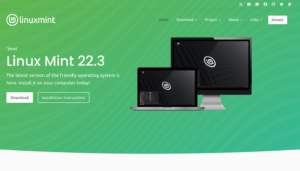
Linux Mint, the distro I chose to try out, was a surprise. By itself, an out-of-the-box complete, user-friendly experience. It comes with most, if not all, of the tools the average user would want without the need for subscriptions, purchases or extra downloads.
Naturally, the development tools I’d been using through Windows were as easy or easier to set up, and ran even better without all that extra baggage. Funny enough, even VSCode, Microsoft’s admittedly excellent code editor, works on Linux, though I eventually opted to cut even that tie to the tech giant.
It didn’t take long to recognize that this new environment was more than merely “workable.” I had gotten rid of everything I hated about Windows, lost very few things I wanted to keep, and gained even more than I could’ve hoped for.
The Good
I wound up with a lot of unexpected perks after making the move.
- Customization and personalization are just standard. Baked-in. How I want my “Start Menu” to work, or if I even want such a thing at all, is entirely up to me. My backgrounds, my colors, my animations. My system is my system. It’s so incredibly freeing to be able to say that.
- The more open, malleable nature of Linux has also inspired me to experiment with the system in ways I never felt I could or should on Windows. Two files, in particular .bashrc and .bash_aliases are practically gateway drugs that have inspired me to not just use others’ “toys,” but to make my own.
- The Linux “App Store” (in its various forms across the distros) has also turned out to be a treasure trove off incredible tools and toys I probably never would have heard of, let alone tried on Windows. Even better, at least as of this writing, “beloved” big players like Adobe are largely absent.
The Bad
I would be remiss in not acknowledging some of the challenges of making the switch:
- There are a few applications stranded on Windows that I don’t look like they’ll be migrating over any time soon. I won’t pretend I’m hurting for alternatives, but it’s still a shame.
- Dealing with multiple monitors can sometimes be problematic. The monitors work just fine, but customizing them can be a bit buggy, particularly with a setup like mine where the monitors are regularly attached and detached.
- And a variety of other minor niggles too small to mention
Should You Do It?
Overall, it’s been an outstanding experience for me in many ways, but this isn’t a move I recommend to just anyone.
If you have programs/applications they absolutely need that can’t be used on Linux (yet), there’s not much to be done about that.
If you aren’t technically-inclined, or at least close to someone that is, you might not even be able to figure out how to install Linux, never mind fixing any issues that might arise.
That being said, for the most basic of users– people that only use a browser and the most basic of office applications– it might actually be ideal, and even better than Windows.
Probably the people I’d recommend Linux to the most are those with a middling level of competence, especially those that would like to raise that level. For them, it’s a great OS and an even better training ground.